


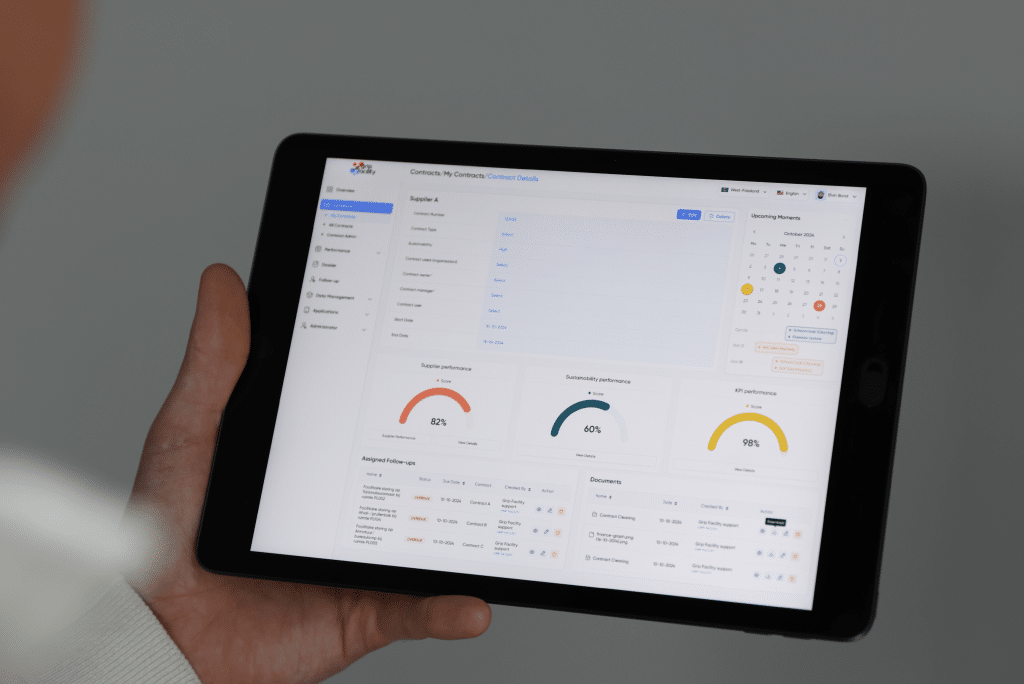
What should good contract management software be able to do? Here are the 8 most important functions you should look for.
In this article
1Central contract overview
All contracts in one place, with clear status indicators and easy search functionality. Good software also keeps that overview clean: it prevents the same contract from being stored twice. GRIP checks contracts coming in from an ERP or purchase-to-pay system such as AFAS or Spend Cloud against the contracts already in your environment, and excludes the ones that are already there from the import. When a contract document is read in, the AI recognises whether that contract is already present. Duplicate contracts are identified before they reach your overview.
2Document management
Store all contract documents, appendices and correspondence linked to the right contract.
3Expiration monitoring
Automatic alerts for contract expirations and renewal deadlines.
4Financial tracking
Track contract values, indexations and budget versus actuals.
5Performance measurement
Monitor KPIs and SLAs to ensure suppliers deliver on their promises.
6Action management
Track tasks and actions related to contracts with clear ownership and deadlines.
7Reporting
Generate reports for management, stakeholders and audits with a few clicks.
8Integration capabilities
Connect with your ERP, FMIS and other systems for seamless data flow.
Looking for contract management software that has it all? Explore our Contract Dashboard.